Showing posts with label nebbiolo. Show all posts

Friday, October 30, 2020

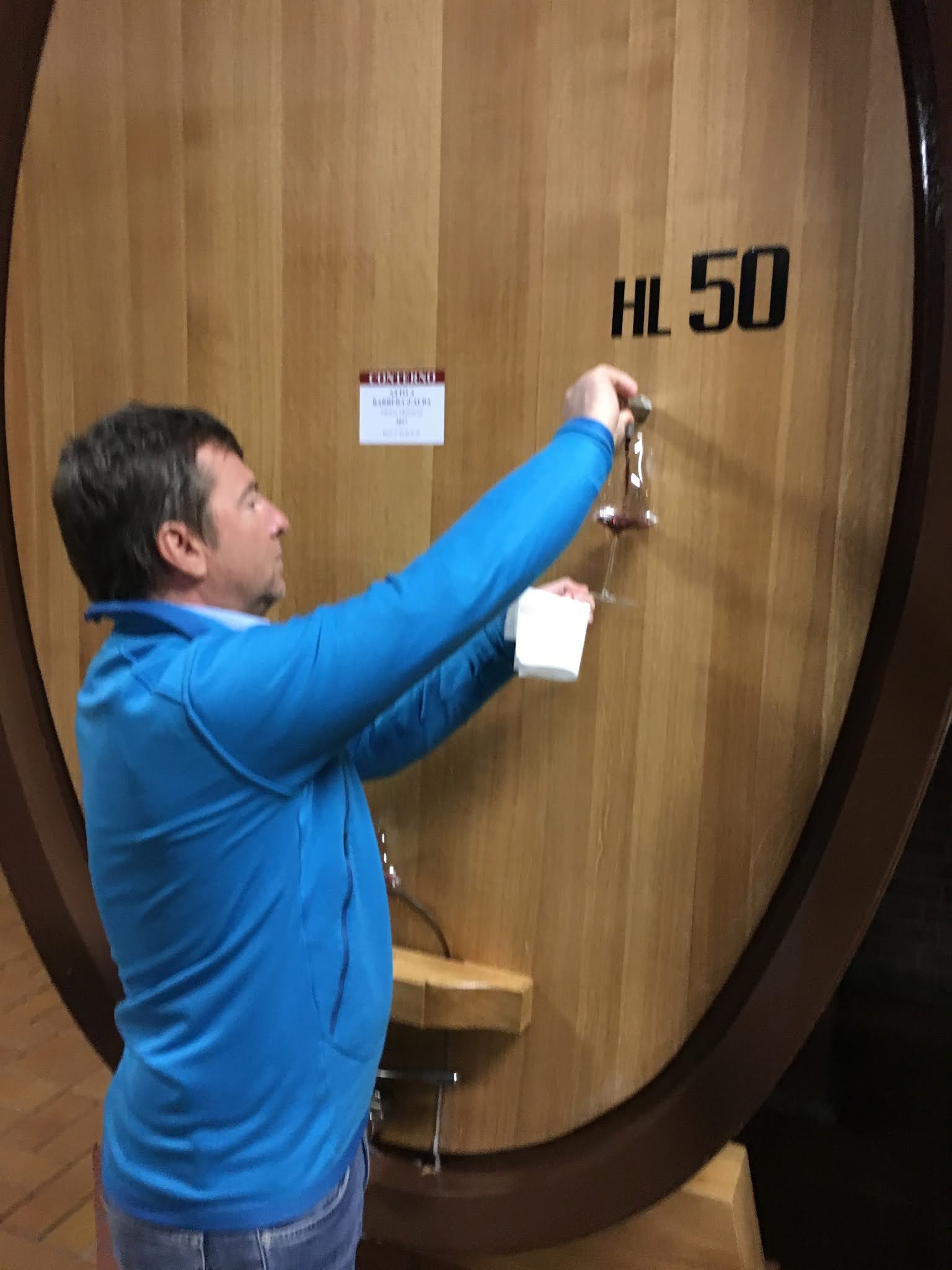
Tasting 2014 Monfortino from Barrel with Giacomo Conterno, February 2019


The attention to detail is unlike any other winery visit in this Monforte d’alba Cantina.  

A pleasure to taste 2014 Monfortino from Barrel with Roberto Conterno. The 2014 is the most exciting vintage for Roberto and also the last vintage before he begins his new production of a historic plot in Arione which he decided has the potential to be part of the Monfortino cuvee. 

The Monfortino selection begins in the vineyards of Francia in Serralunga. The grapes need to have the characteristic chewy mouthfeel and potential to withstand longterm aging to be selected for that specific barrel. 

With the arrival of the southwest facing vineyard of Arione in 2015 
Conterno will start to produce a Barolo bottling exclusively from that vineyard which will be exciting to see. 
Grazie 🙏


Sunday, September 8, 2019

Hail storm strikes Barolos precious vineyards

September 5th and 6th brought some unfortunate hail to the Langhe right before harvest as grapes were reaching optimal ripeness.  Giulia Negri posted this bunch of injured nebbiolo grapes from her Serradenari vineyard in La Morra.

"Unfortunately the hail hit almost all of our vineyards with estimated losses starting from 20% in some parcels up to 50% in others, with an average of about 35-40%.  In certain areas (fortunately a few) the leaf canopy was stripped, in others completely destroyed- proof of the severity of the damage.

Our incredible team, that saw a years worth of dedication and effort diminish in a mere 10 minutes, but who also know how to see the glass half full, will do everything possible to bring forth a great 2019. Now we hope for a little bit of sun."  

Sunday, November 13, 2016

Langhe Nebbiolo lot 1 and lot 2 with Alfio Cavallotto in Manhattan

Above: On my left, Mark Fornatale, Italian portfolio manager for Skurnik imports and to my right is Alfio Cavallotto tasting a lineup of current releases.  

The Cavallotto estate is on my top 5 list of traditional Nebbiolo no doubt.  All the vineyards and production of Cavallotto wines are located in Bricco Boschis of Castiglione Falletto which is quite unique for a Barolo producer.  They do make a Barolo Vignolo as well which is attached to the Bricco Boschis.  This means all of the Nebbiolo fruit has the potential to become Barolo. I carry the Langhe Nebbiolo on my restaurants list and it is one of my favorite bottles to sell and the value is unbeatable.  They usually release two different lots as Langhe Nebbiolo while they are deciding what to keep for Barolo and what to bottle earlier as Langhe Nebbiolo. 

When we tasted this week I was amazed by how much the Langhe was drinking like a young Barolo and I soon learned how they just released the second lot which has aged 23 months in large botti compared with the normal 18 months of the first Langhe Nebbiolo lot.  Below you can see on the left of the label the dates L 16.02.16 for the bottle on the left vs L 12.07.16 on the right.  This is always reassuring and it seems to me the new generations of wine makers are trying to be more and more informative when labeling wines.  Both wines are absolutely delicious and Alfio thinks you couldn't tell them apart unless you were drinking them side by side. I believe those extra 5 months give it an extra boost in complexity and in aging potential.  All I can hope for is that these wines will remain one of the best values in Piedmont Nebbiolo. 


Sunday, March 1, 2015

Nebbiolo of the day, Giuseppe Rinaldi Brunate 2005

Still life of Giuseppe Rinaldi Initialed boot by Moreschi with a magnum of limited edition 2005 Barolo Brunate signed by Giuseppe himself. 

Saturday, November 8, 2014

Barolo bar 2014 at Maialino NYC

What better way is there to spend a late afternoon in New York than looking out into Gramercy Park
and tasting through this epic list of Barolo by the glass at Bar Maialino


Tasting these big name Nebbiolo's side by side was a soothing experience that was a much needed contrast to the usual chaotic tasting room scene one hurriedly darts through in Manhattan. The photo of the below list can speak for itself but there were some surprises of course.

The 1999 Bartolo Mascarello was drinking the best for me. 1999 was a classic vintage in the Langhe and the consistency I have found with Bartolo Mascarello Barolo's is unmatched by any other producer in my opinion.  They have also bottled an insane 2003 Barolo in such a difficult vintage and you'll see most other producers are already drinking past their peaks with that very hot and over ripe vintage of 2003.  Bartolo sources the grapes from the vineyards of Canubbi, San Lorenzo, Rue and Rocche' and is always a blended Barolo.

The 2003 Giacomo Conterno, Cascina Francia was showing a very promising aromatic profile from the glass.  A delicious balance of fruit, herbs and spice, but on the palate fell very short.  There really is no structure or length for this expression of 2003, but is still delicious to chug down with food if you just want a tasty Barolo without thinking too hard about it (for $39 a glass).


The Giuseppe Mascarello, Monprivato 2005 was another favorite of mine at the bar.  This beast from Castiglione Falleto was showing a nice bloody muscular side of Barolo and was still very young and big but also generously food friendly.

At the beginning we started off with a taste of the 2007 Fratelli Alessandria, Monvigliero.  Monvigliero is the prized single vineyard in the northern Verduno area of Barolo and is known for its greatly aromatic wines that also bring a firm backbone and great complexity.  This wine did not let us down.  It was showing that amazing Langhe bouquet while still being very traditional and approachable for such a young wine.  A step lighter in body than some of the big hitters on the list but Monvigliero for me is delivering some promising and exciting wines for the market here in the United States.

The 2000 Giuseppe Rinaldi, Brunate-Le Coste was a wine I was so looking forward to tasting.  They are one of the most sought-after and prized of all the Barolos.  When they are on point they are fucking amazing and life changing but there definitely isn't the consistency I see in a producer like Bartolo Mascarello.  This wine was pretty wild.  At first it had a big chemically wet paint and truffle aroma almost coming off as a touch of volatile acidity.  The harshest of it blew off after a minute in the glass but it was still an amazing wine to meditate over.  It had very beautiful layers and was insanely complex but I have to like the Bartolo over this wine because of its absolute harmony and togetherness.  I was sipping with a few Maialino employees at the bar and was informed that it wasn't just this bottle that was showing the slight V.A.

As of 2010 Rinaldi's Barolo will be labeled as just "Brunate" and "Tre Tine" as the law no longer permits two vineyards on a single label.


Happy Nebbiolo Season! I hope to be back soon.

Monday, October 20, 2014

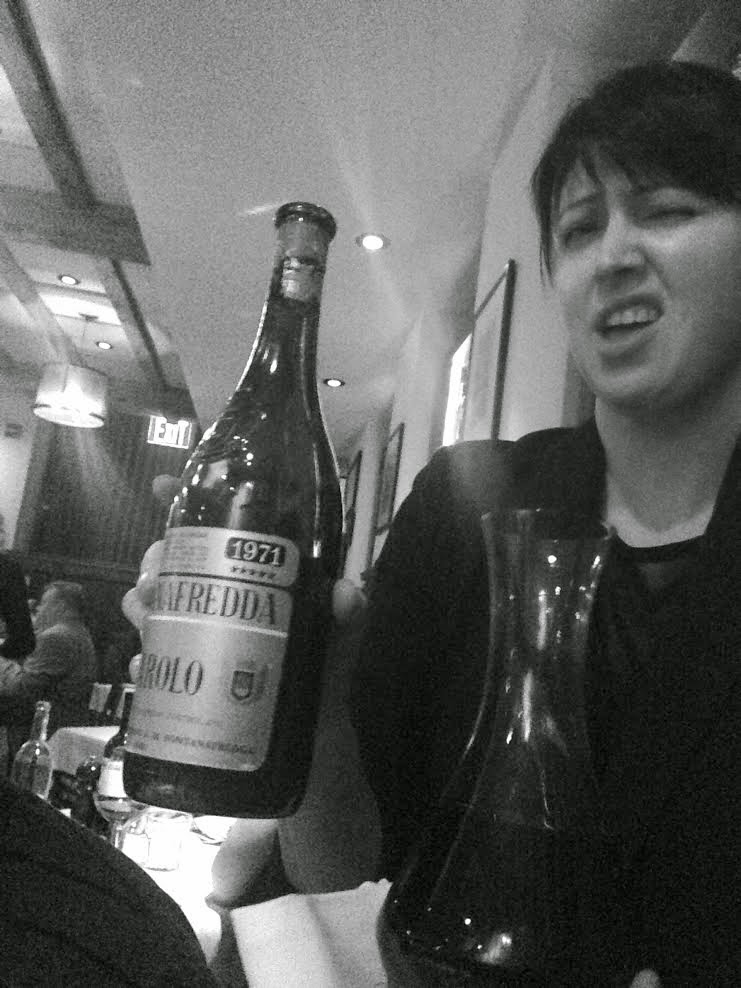
1971 Barolo Fontanafredda at Maialino NYC

Uncorking this 1971 Fontana Fredda Barolo this weekend at Maialino in New York City 
was a bit like opening a coffin in The Langhe and experiencing Nebbiolo zombies awakening from the dead to slowly climb into the glass.  


At first this wine smelled of rotten corpse, soil and maybe some tar for the sake of tradition.  Slowly opening into what reminded me of molded fruit loops covered in forest soil, and eventually into a more focused cherry with long classic Nebbiolo notes but still with a sense of rotting materials.  The acid was healthy as hell and the colour was notably a few more notches towards ruby than I expected.  I have had 80's Barbaresco and Barolo that were much more orange in colour.  But this was a fabulous and memorable wine and I believe we enjoyed the last bottle stocked at Maialino.


Monday, September 29, 2014

Nebbiolo of the day! Barolo Monvigliero by Castello di Verduno


After shuffling through some 30 to 40 wines at last weeks Domenico Valentino tasting in NYC at 
I Trulli restaurant I stopped everything the second this nebbiolo entered my glass.

Castello di Verduno makes some interesting, fun and easy drinking wines such as their bottlings of Pelaverga which include a bianco, a rosso and a sparkling rosato.  I have worked a lot with their Pelavergas and some Barbaresco as well but tasting their Barolo is a different story.  These expressions of Nebbiolo show that they aren't just about fun and games all the time but can put out a serious traditional styled bottle of Barolo that is absolutely delicious.

Castello di Verduno gets their name from the village of Verduno in the north most part of the Barolo DOCG right above La Morra.  Monvigliero, the grand cru of the area is known for its fine white marl, also known as "Marne di Sant' Agata''.  The soil produces age-worthy wines that are distinct and aromatically complex.  The 2007 Riserva (aged at least 30 months in botti grandi) was already so expressive with layers and layers of classic nebbiolo rose, cherry, liquorish and tar unfolding from the nose.  The tannins were very present but not overwhelming as many traditional 2007 Barolos are at this point in their life.

 A look from near the top of the CDV Monvigliero vineyard, captured courtesy of Levi Dalton

Monday, May 5, 2014

Francesco Rinaldi, the meaning of ''Cannubbio''


During a reunion of friends and past Maialino wine team colleagues, we sampled from a beautiful roman menu and were fortunate to get served some memorable Nebbiolo from wine director, Jeff Kellogg.

After quenching our Champagne thirst we dove into two Nebbiolo's, a 1989 Francesco Rinaldi Barolo ''Cannubbio'', followed by a 1974 Oddero Barolo.

The '74 Oddero was drinking right around its peak, perhaps a touch past.  A bit thinner than the Rinaldi with an edgier acidity, tasting like a cigarette was put out in a shot of half cherry liquer half swamp water with a garnish of taleggio rind… you know in a delicious way though.

The Cannubbio from Rinaldi was one of the top five Nebbiolo's I have ever consumed no doubt.
Swampy cherries, with a gigantic liquorish bouquet, morphing into dark chocolate and tar, with a background of wilting roses.  Medium and long in body with still a large, youthful mid palate and gorgeous acidity that will allow this bad guy to age for at least 20 more years.  Drinking this wine was like riding an everlasting Nebbiolo wave.

What and where is Cannubbio?

After some research and a read through the Slowfood book,  ''a wine atlas of the Langhe'', I was surprised to find no easy answers regarding the intentions of ''Cannubbio'' on Rinaldi's Barolo labels.
I found three websites all providing different information about Cannubbio, Cannubi and Cannubi Boschis.

I Emailed over to the Francesco Rinaldi winery in Barolo to find out the deal, Paola responded as follows…

''Cannubbio was the old name used for this area (we found it in old documents and books). The modern name is Cannubi (on the maps starting with vintage 2010). Our old vintages are Barolo Cannubbio and our Barolo 2010 is Cannubi. We own nearly 2 hectars in Cannubi boschis  (the first part of the hill) and a small part in Cannubi (in the middle of the hill)


In the article Battling bureaucracy in BaroloJancis Robinson writes about the controversial change Giuseppe Rinaldi was forced into.  As of 2010 they can no longer label a Barolo ''Brunate-Le Coste'' because of two vineyards appearing on the label (It seems the 2010 will be labeled Brunate but will contain a blend of 15% Le-Coste grapes.) But as far as Cannubi goes, it seems to be okay to label a Barolo ''Cannubi'' even if its coming from the Cannubi Boschis (aka Monghisolfo) or other surrounding Cannubi sub zone vineyards. 

My friend Alfonso Cevola wrote on the current state of Cannubi itself a couple of years ago in an article To Cannubi or not to Cannubi? where he was coming up with at least 25 hectares of wine being labeled Cannubi even though it is an area of 15 hectares.

I guess this is all a classic example of how strange, unorganized and controversial Italian wine is.  I originally only wanted to share a few amazing wines I recently drank and the cannubbio gods took me on a never-ending tangent.  And I guess after three days of searching my original idea of ''sure, cannubbio is synonymous with cannubi right? hasn't really changed that much.

Happy Nebbiolo drinking


Tuesday, November 26, 2013

Missing the Piedmontese life in New York City.

During my Journey back to America from my South East Asia Adventures I received some photos from friends enjoying a Piedmontese life at Maialino in New York City.  Damn, these are two things that I will never feel bad about when returning to the city.

White Alba truffles and baseball, Maialino New York City.

Some 1971 Oddero Barolo is poured at Maialino to compliment the seasons white truffles.

Tuesday, August 20, 2013

1984 Ceretto Barolo Zonchera Tasting Notes:


Above, The 1984 Barolo Zonchera from Ceretto (my first tasting of my own birth vintage) ended up being surprisingly drinkable and enjoyable.  In the glass the colour was very cloudy light, light red but not your typical orange rimmed old Nebbiolo.  There was an immediate aroma of dark soils and heated chocolate.  Developing into a rusty nose with a smokiness, resembling an opened bag of BBQ potato chips.  Once swallowed there was pretty much zero complexity or finish.  Pretty much all of the fruit has disappeared from this wine, but the acidity was surprisingly healthy and balanced.  There was a hell of a lot going on in the nose, but quite thin on the palate and finish.  A battered and weathered Barolo, refusing to die, holding on for dear life.

 For me the thinness was expressive of the cold and rainy month and a half during the crucial period for the grapes ripening levels before harvest.  But the fact that this wine is still alive 29 years later given all of the hazardous elements mother nature threw its way is pretty cool.


1984 Piedmont Vintage Report - Decanter.com

''The first three months of the year were cool with some snow. April was fair, but May was cold, cloudy and wet causing problems for bud-break. A problematic June meant flowering delayed by two to three weeks. The ripening process was hampered at key moments in the summer by rain and humidity, and a cool autumn was partly ameliorated by a warm final ripening period for Barolo.''

Wednesday, July 10, 2013

Coming back around to Sperss, 1990.


A 1990 Sperss from Gaja made it onto the table of a lucky couple a few evenings ago.  The 1990 was the second year of production for the Sperss and still at that point a 100% Nebbiolo wine.  I was able to taste and receive some information from Angelo a few years back on Sperss and the 1989 vintage.

The Sperss plantings are within the Marenca-Rivette Area in South/Central Serralunga with an area of about 30 acres. 

The 1990 was just as exciting as the 1989 bottling and probably even more complex.  When first opened there was an explosion of chocolate that seducted the taster.  Ten minutes into it all of the rose petal and cherry tar complexity was released and tasted as if it were a different wine.

We double decanted this as Angelo Gaja suggests.  I always find it the best to drink a fine wine like this exactly how the wine maker or wine creator would drink them, as he certainly knows best. 

Below a map showing Marenca-Rivette in green and orange within the mid section of Serralunga.


Tuesday, May 7, 2013

The colours of Vajra, and an unexpected Barbera d'Alba Superiore 2009.

Above, side by side, the soft colours of Nebbiolo (left) against the intensely dark purple  Barbera (right)

I had a brief stop and chat with Giuseppe Vaira in New York City last week and I managed to sample a couple of his wines right after he rushed out the door in typical New York Fashion.  Having the night off, I actually brought these two bottles home with me: a 2008 Barolo Albe, and a 2009 Barbera d'Alba Superiore.  The pleasant Barolo Albe coming from three vineyards, Le coste, Fossati and La Volta is usually a leaner, approachable style of Barolo but still with those traditional Nebbiolo notes you love.

I poured some of the Barbera Superiore into my glass and my only immediate reaction was a "Holy shit!''.  This is definitely a bold and intense expression of Barbera which seems to coat your mouth in a syrupy fashion. This Barbera is not playing games, just kicking asses and taking names. I have tasted many of the these wines on different occasions, but the 2009 Barbera in my glass seemed to be showing outside of the Vajra style I was used to.  Giuseppe was already flying back to his new daughter, so I threw an E-mail to his sister Francesca Vaira, who I happened to meet two years ago in Rome

Francesca explains that the Barbera d'Alba Superiore starts with the vineyard, the criteria being the vines that work the hardest to produce the best fruit.  The vines are either coming from the oldest vineyards or those from the poorest soils.  This selection produces natural yields year after year. 2009 was also a hot and dry year preceded by a very snowy winter, an ideal condition for the correct development of the vines.

''Denso sì,  di una densità dovuta all’annata e alle viti, 
non certo alla lavorazione in cantina.''

The most important thing to note is that this very concentrated and ripe Barbera is an expression of the selected vineyards and vintage, and not that of the work/vinification techniques used in the cellars.

Thank you Giuseppe and Francesca, always a pleasure to taste and learn about the wines of Vajra.


Wednesday, November 21, 2012

2003 Bartolo Mascarello and white truffles


While tasting a flight of Nebbiolo based wines tonight at Maialino, I finally went for it and ordered some white truffles. House made Tonnarelli done in butter, a touch of Parmigiano Reggiano and finished with the sacred whites truffles from Alba shaved gently over the top.
Ragazzi, che meraviglia...

I saved the Bartolo Mascarello tasting for the arrival of the white truffles.  The 2003 we are currently pouring by the glass at Maialino, along with about 15 other amazing Nebbiolo based wines on the Enomatic Nebbiolo Bar.  Bartolo for $140 a bottle in a NYC restaurant is quite a steal!  This wine is very aromatic right off the bat with classic roses, earth, tar and liquorish.  The acidity is still brilliant and it is a no-brainer when it comes to a pairing with tartufi bianchi di Alba.

But 2003?  Yes an overall shit year, being overly hot and resulting in scorched vineyards, but true producers were able to put together some fine wines which are drinking gorgeously right now at only 9 years out.  Where I have tasted some B. Mascarello from finer and more talked about vintages such as 97, 98 and 2000 they can go through unfortunate stages where they are completely closed and inexpressive.

This type of experience can definitely make one rethink the whole process of selecting a vintage, especially in a restaurant setting where sometimes the underdog vintage will triumph in the end.

Thursday, April 12, 2012

The wines of Lorenzo Alutto, Ca Du Rabaja'


While tasting the Bressan line up with Paolo Bernardi he directed me over to Lorenzo Alutto where he recommended tasting the fairly new to the scene but traditional Ca Du Rabaja' Barbaresco's.  The first vintage was in 2005 and was the idea of Lorenzo Alutto's Father Giovanni. For decades their fruit was used in the Produttori del Barbaresco Rabaja blend but Giovanni wanted to make his own wine expressing the fine terroir. Giovanni passed away in 2004 and the winery is now in the hands of Lorenzo.  The winery was named after Lorenzo's grandfather of the same name, which is very common in Piedmont.  Lorenzo was energetic and very excited to talk about traditional Nebbiolo.

Renzo Alutto at Ca' du Rabajà. (Photo: Polaner Selections.)

The 2008 and 2009 Barbaresco Rabaja' we tasted were quite different.  In 2008 the harvest ended on the 20th of October while the warmer 2009 harvest ended almost 3 weeks earlier at the end of September.  He explained the 2008 Rabaja' as being ''pieno di liquirizia, quasi un Barolo''.

No doubt these wines will need some years to see their full potential but they are already exciting.  And with Dante Scaglione (winemaker from Bruno Giacosa) as the wine consultant you cant help but to get excited yourself to see what will come of these Rabaja' wines.


Tasting some tank samples of the 2011's with Lorenzo Alutto.

Wednesday, March 7, 2012

Scan Life with Antonio Vallana Spanna


Stumbled upon a very modestly priced bottle of Antonio Vallana Colline Novaresi 2008 at around $13.  Started searching out some information on this wine when I noticed the QR (Quick Response) Code apart from the UPC code.  I have seen these around and haven't had the chance to research or use the technology at all.  But now that I have found it on bottles of delicious Spanna I decided it was time to check it out.  Apparently the QR code was invented by Toyota in 1994 as a way to track vehicles during manufacturing.  I guess I'm a little behind the times, but in this particular case it was amazing when I simply scanned the code with the ScanLife App within a second it brought me to a webpage with all the information I was looking for on this particular wine.


Above, scanning the QR code to the bottom right....


Instant information about the wine popping up at Michael Skurnik Wines...

Besides all this nerdy shit, the wine was delicious and simple upon opening. although the next day opened up a beautiful and deep earthiness that didnt exist previously.  Skurnik says we have 95% Spanna with the balance Vespolina and Bonarda.  It is quite a bright colour and not exactly what you would expect (coulorwise) from a 100% nebbiolo wine vinified traditionally.  It is Fermented in cement tanks and then is aged for six months in large oak casks.

Sunday, February 19, 2012

Nebbiolo Brut Rose, and then to the worlds biggest little city (once again)


After a long 15 hours shift, thers nothing to refresh you like a glass of Aldo Rainoldi Brut Rose.  For sure one of my favorite wines on the Maialino list.  This unique bubbly from the Valtellina is made from 92 percent Chiavennasca (Nebbiolo), 4% Pignola and 4% Rossola. Very dry but with bright fruit and acidity, and a touch of that yeasty complexity.  After slurping back some of this love in a glass Im in Brooklyn for the night with an early flight to Reno.  For such a place that doesn't connect much with my taste and style, I must say I miss Reno often, and have been in and out of the Airport more than any other.

Tuesday, February 7, 2012

Tajarin and 2010 Langhe Nebbiolo


Tajarin was on the menu last night so I experimented with a traditional way of serving the pasta, al sugo di fegatini (chicken liver ragu).  I made the sauce with finely chopped onion, chicken livers, a ground meat mix of veal, beef and pork, bay leaf, chicken stock, tomato and just a small amount of guanciale which helped mellow out the sometimes overpowering flavor of chicken liver.  

Drinking with this piedmont classic I took out the current release of 2010 Langhe Nebbiolo from Produttori del Barbaresco.  In 2010 Piedmont received quite a lot of rain and winemakers were somewhat surprised to see the harvest ending with a superior quality.  This bottling of 2010 Nebbiolo was delicious and it was showing some mint and liquorish notes that weren't so present in the last three vintages of Produttori's Langhe Nebbiolo I have tasted.  Such an awesome easy drinking $20 price range wine, that is now my go to bottle here in brooklyn.


In other nebbiolo news...

Had the chance to pop a bottle of Erpacrife two nights ago, and If your into funky ass sparkling wines put this shit on your list!  This wine is made from 100% Nebbiolo grapes and vinified in the Metodo Classico.  The name comes from the first syllable of the names of four Italian friends who met in enology school in Alba. Light, Fresh yet complex, with sweet and dusty red fruit.

Monday, January 16, 2012

The Langhe: 1978


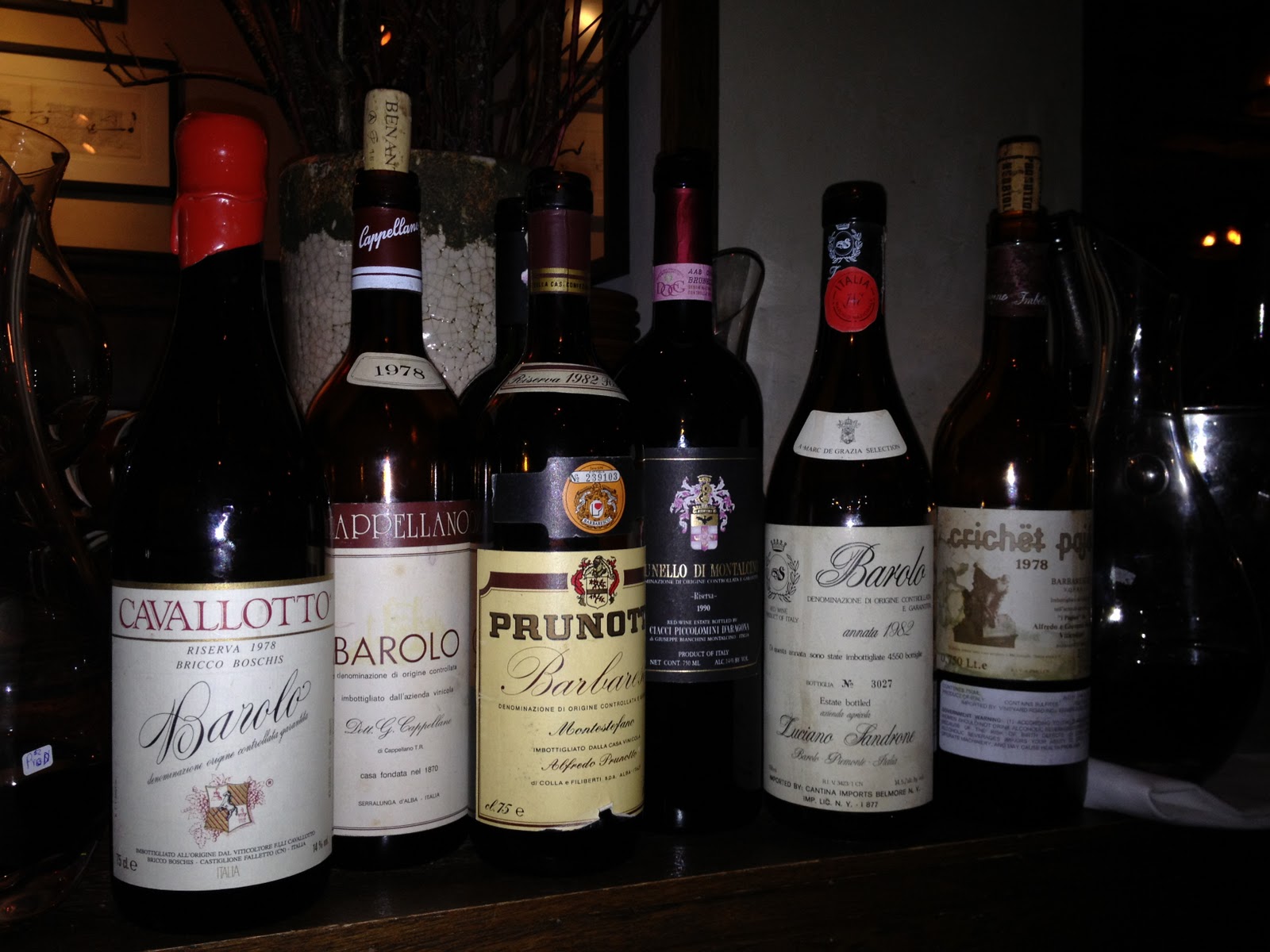
New York City, Friday the 13th 1/13/2012: This tasting of Barolo and Barbaresco from 1978 and 1982, two of the most memorable vintages in The Langhe turned into a horizontal of 1978 after all but one of the 82's (including Giacosa, Barbaresco Santo Stefano Di Neive) happened to be off.

1978 in The Langhe:  I definitely wasn't around in 1978 but apparently it was a surprising vintage after irregular bud break with which the plants held little fruit going into a rather cool summer.  A month before harvest though, the region saw a magnificent sunshine and heat that was steady and balanced by cool nights which led to rich and aromatically expressive fruit at harvest time.

There was quite a lot of variation in the 78's which I think is partially due to change in storage and relocation during the 30+ years after their release.


1978 Roagna, Barbaresco Crichet Paje'.  The first wine i actually tasted and was stunning right off the bat.  It also ended up being my favorite and the best all around in terms of healthy fruit and expression on that night.  This very special Riserva from Roagna is only released on exceptional vintages from the best selected fruit in the Paje' vineyard.  It is very traditional and undergoes maceration with submerged cap for 80-100 days and then spends around 8 years in French and Slavonian Oak.  This wine was drinking really unique showing balance, sweaty red fruit, earth and barn.  Delicate yet strong, I could only describe it as sweaty socks prancing through a cherry field.

1978 Cavalotto Brico Boschis, Barolo.  Still big tannins and some fruit.  Almost feeling like it was stubborn and closed and had something else to offer just not that day.

1978 Cappellano, Barolo.  This wine was pretty long and casual until the back palate morphed into an aftertaste of blood.  It actually felt like biting into somebody's neck, or that sensation you get when you taste your own blood.

1978 Produttori del Barbaresco, Barbaresco Rabaja'.  I really wish I tasted this wine earlier on.  It was actually decanted because it was so big and bound up in the beginning.  First taste was super seductive terroir that I can't really put into words. Healthy fruit with great hope, but a big failure in the back palate as the wine just disintegrated leaving you with a thin wateriness in the end.  After hours of being decanted I believe this wine had a perfect drinking period that night but I missed it.

1990 Ciacci Piccolomini, Brunello di Montalcino. This spends four years in Slavonian oak and surprisingly wasn't showing that much more youthful than some of the 78 Barolo. There was a lot of pencil led, meat, frutti di bosco and barnyard.

1982 Luciano Sandrone Barolo.  One of the off bottles, slightly oxidated but with a notably rich nose of Moroccan spices that was mind blowing.  On the palate it was not like this at all.  Tasted mostly unbalanced and weird but not so off that you couldn't taste it.  I would like to taste a healthy version sometime to see exactly how off this bottling was.

1982 Prunotto, Barbaresco Riserva, Montestefano.  I had a longer time to be able to analyze this Barbaresco.  I drank it a day after being opened and really got to enjoy the brilliant orange Nebbiolo hue. Coming from one of the Baroloesque vineyards in Barbaresco It was quite pleasing and in good shape.  Still with enough lively acidity, some masculine fruit and barnyard notes that kept opening up more and more in the Burgundy glass.

1975 Freiherr Langwerth Von Simmern Rauenthaler Baiken Riesling.  This wine was absolutely awesome.  Hard to find notes on the winemaking, but with it's botrytized character on the nose and remarkable complexity on the palate it reminded me of the great ways in which you would describe a Chateau d'Yquem.  Really lengthy lasting 2-3 minutes in the mouth and morphing through classic rich apricot and honey notes but being balanced the entire time with a big riesling acidity.


Friday, December 9, 2011