Showing posts with label vino italiano. Show all posts

Friday, October 30, 2020

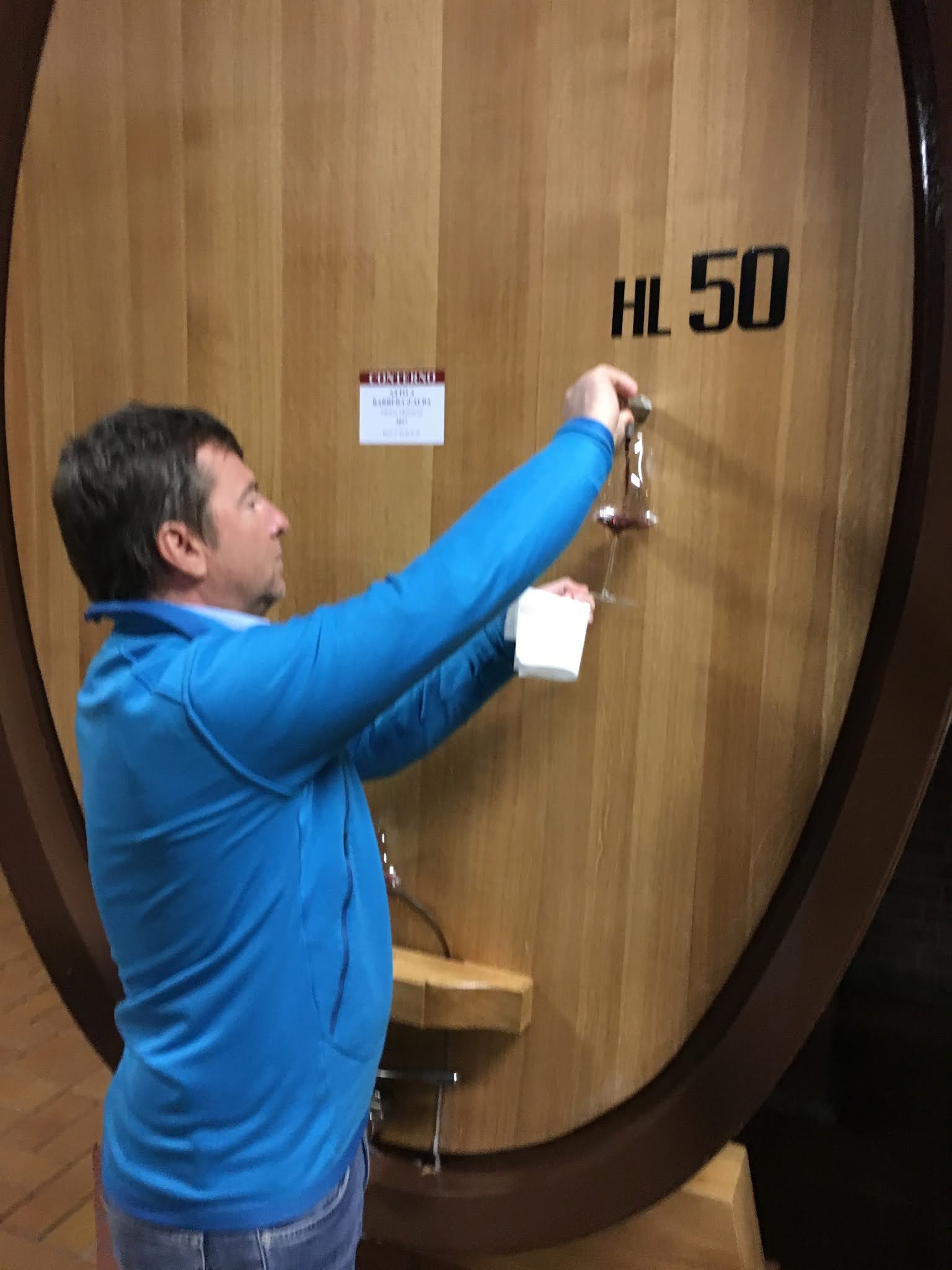
Tasting 2014 Monfortino from Barrel with Giacomo Conterno, February 2019


The attention to detail is unlike any other winery visit in this Monforte d’alba Cantina.  

A pleasure to taste 2014 Monfortino from Barrel with Roberto Conterno. The 2014 is the most exciting vintage for Roberto and also the last vintage before he begins his new production of a historic plot in Arione which he decided has the potential to be part of the Monfortino cuvee. 

The Monfortino selection begins in the vineyards of Francia in Serralunga. The grapes need to have the characteristic chewy mouthfeel and potential to withstand longterm aging to be selected for that specific barrel. 

With the arrival of the southwest facing vineyard of Arione in 2015 
Conterno will start to produce a Barolo bottling exclusively from that vineyard which will be exciting to see. 
Grazie 🙏


Sunday, September 8, 2019

Hail storm strikes Barolos precious vineyards

September 5th and 6th brought some unfortunate hail to the Langhe right before harvest as grapes were reaching optimal ripeness.  Giulia Negri posted this bunch of injured nebbiolo grapes from her Serradenari vineyard in La Morra.

"Unfortunately the hail hit almost all of our vineyards with estimated losses starting from 20% in some parcels up to 50% in others, with an average of about 35-40%.  In certain areas (fortunately a few) the leaf canopy was stripped, in others completely destroyed- proof of the severity of the damage.

Our incredible team, that saw a years worth of dedication and effort diminish in a mere 10 minutes, but who also know how to see the glass half full, will do everything possible to bring forth a great 2019. Now we hope for a little bit of sun."  

Sunday, November 13, 2016

Langhe Nebbiolo lot 1 and lot 2 with Alfio Cavallotto in Manhattan

Above: On my left, Mark Fornatale, Italian portfolio manager for Skurnik imports and to my right is Alfio Cavallotto tasting a lineup of current releases.  

The Cavallotto estate is on my top 5 list of traditional Nebbiolo no doubt.  All the vineyards and production of Cavallotto wines are located in Bricco Boschis of Castiglione Falletto which is quite unique for a Barolo producer.  They do make a Barolo Vignolo as well which is attached to the Bricco Boschis.  This means all of the Nebbiolo fruit has the potential to become Barolo. I carry the Langhe Nebbiolo on my restaurants list and it is one of my favorite bottles to sell and the value is unbeatable.  They usually release two different lots as Langhe Nebbiolo while they are deciding what to keep for Barolo and what to bottle earlier as Langhe Nebbiolo. 

When we tasted this week I was amazed by how much the Langhe was drinking like a young Barolo and I soon learned how they just released the second lot which has aged 23 months in large botti compared with the normal 18 months of the first Langhe Nebbiolo lot.  Below you can see on the left of the label the dates L 16.02.16 for the bottle on the left vs L 12.07.16 on the right.  This is always reassuring and it seems to me the new generations of wine makers are trying to be more and more informative when labeling wines.  Both wines are absolutely delicious and Alfio thinks you couldn't tell them apart unless you were drinking them side by side. I believe those extra 5 months give it an extra boost in complexity and in aging potential.  All I can hope for is that these wines will remain one of the best values in Piedmont Nebbiolo. 


Friday, October 7, 2016

Matteo Gatti manual disgorging a 2006 Franciacorta Extra Brut

From one cantina to another we discovered that Franciacorta winemakers are doing a lot of experimenting.  Here is an example of Matteo Gatti of Ferghettina disgorging a 2006 Brut that has been hanging onto the lees for ten years. They dedicate a section of their cellar they call the library for saving bottles and playing with aging capabilities.

Friday, September 23, 2016

The styles of Franciacorta from the big to the small

The van door closed one last time and I clumsily stumbled back towards the agriturismo buzzed and exhausted with the other four American wine writers for Franciacorta.  We just finished a memorable dinner of lasagne, donkey steaks and polenta and we gathered on the second floor deck to wind down with one last bottle.  After tasting over 20 wines a day we suddenly realized that we hadn't found one wine we disliked during our three days touring wineries.  That dinner we finally opened an offensive bottle that shocked us a bit but hey, it's bound to happen eventually and it actually helped put everything into perspective.  We needed a redemption bottle and we popped a delicious Brut vintage 2009 from Ronco Calino which spends 50 months on the lees.  The sharp cool air was a comforting shock on the skin and the healthy bubbles from Calino reminded us of all the great stuff we drank these last few days.

The wavy vineyards of Ronco Calino in the backyard of the winery

Consistancy and quality is a huge stand out here in Franciacorta and you can see it from a smaller 70,000 bottle producer like Ronco Calino all the way to the gigantic 1.5 million bottle production of Ca' del Bosco.  

Ferghettinas square bottle in the lights of the cellar
There are also many unique styles in production from one winery to the next. Mosnel swears by their horizontal stainless steel tanks to achieve more complexity.  They have some of the most drinkable and refreshing yet complex wines of the trip.  Ca' del Bosco puts all of their grapes through a jacuzzi bath to reduce sulfites before they end up in the biggest stainless steel tank I have ever seen in my life.  They even add Nitrogen to eliminate the presence of oxygen while Mattia Vezzola of Bellavista purposely adds oxygen to the must with his unique method to eliminate impurities, a campaign they call "air your wine".  Another interesting idea comes from Matteo Gatti of Ferghettina who patented a square bottle so there is more surface area for the wine to come in contact with the lees.  The Ferghettina winery is a great example of not judging a book by its cover and if you dig deeper into their story it is a truly fascinating one.  While most of the Franciacorta producers have an Industrial background in common, the Ferghettina family come from a background of sharecropping.  

But, whichever style winery you come across the end product that almost all of the producers want to acheive is a similar one.  Fresh, bright, healthy acidity, limited use of oak only for fermentation and usually the least amount of dosage as possible.  These are great wines that taste of the land and express the passion and thirst of the winemakers.

Jeremy next to the epic million bottle Cuvee' Prestige, stainless steel tank at Ca' del Bosco

First day in Franciacorta with team Classicmethod!


Jeremy Parzen aka Do Bianchi above showing us the topographic map of the Franciacorta vineyards when five of us arrived here on Tuesday.  One of the most important things we learned right away about Franciacorta is the diversity in soil types as shown in the different colors on the map.  The wine makers can vinify up to 40 different expressions of chardonnay seperately and combine those base wines in their own artistic expression for their finished product.  This is a mythical place to grow grapes posted up right underneath Lago d'Iseo.  The lake gives a maritime influence on top of the Alpine climate and a prehistoric glacier slide creates a natural amphiteatre almost enclosing the vineyards in the area.   There is an incredible consistency of quality and movement towards organic viticulture that is not easy to come across in any other wine region.  What a complex area to learn about and as Jeremy has said, "These wines aren't beginner wines and deserve some time and concentration to try and understand them."   So I take a deep breath of clean crisp alpine air before diving into this majestic land of grapes and sparkling wine. 

Tuesday, May 24, 2016

Freisa is what im drinkin'

Borgogno, Langhe Freisa, 2013

Freisa is the shit because of its ability to be offensive upon immediate evaluation but with time and patience, it will open up and seduce you somehow someway. While sharing similar nebbiolo characteristics it is opposite in approachability and not nearly as obvious in its appeal. Robert Parker once described it as producing totally repugnant wines and that all the more confirms my point of view.  

The fun part about freisa is you can discover this lesser known grape of Piedmont made by some of your favorite Barolo producers at a fraction of the price their Nebbiolos would cost.

This freisa by Borgogno was very acidic with sour tannins upon first opening.  Still enough fruit to make it drinkable, but the difference after 2 hours was crazy.  It became much more inegrated with the delicious salty raspberry fruit that Freisa famously displays.  There is some rose and liquorish reminiscent of nebbbiolo and the after bite of tannin that keeps your spirit floating in the langhe of your fantasies. 


The 2012 Giuseppe Mascarello Freisa is another hot steal.  Not too hard to find in New York City. 

Friday, August 22, 2014

Remembering Paolo Rapuzzi of Ronchi di Cialla


Pouring some Ribolla out for the lost.  

I Enjoyed a bottle of 2012 Ribolla Gialla from Ronchi di Cialla on a New York City beach earlier this week in memory of Paolo Rapuzzi,  the legendary producer of indigenous varieties of Friuli who passed away on August 13th.  This wine was showing a blazing minerality that day which I have watched open up over the past year since it's release.

Its amazing to watch the improvement of a wine over a period of time.  Something you can only really experience by working in a restaurant and tasting the same wine every single day.  Even a very simple pure Ribolla Gialla.

Thank you Paolo for letting the COF2011 crew into your family's home and opening some very memorable wines with us.  

Monday, May 5, 2014

Francesco Rinaldi, the meaning of ''Cannubbio''


During a reunion of friends and past Maialino wine team colleagues, we sampled from a beautiful roman menu and were fortunate to get served some memorable Nebbiolo from wine director, Jeff Kellogg.

After quenching our Champagne thirst we dove into two Nebbiolo's, a 1989 Francesco Rinaldi Barolo ''Cannubbio'', followed by a 1974 Oddero Barolo.

The '74 Oddero was drinking right around its peak, perhaps a touch past.  A bit thinner than the Rinaldi with an edgier acidity, tasting like a cigarette was put out in a shot of half cherry liquer half swamp water with a garnish of taleggio rind… you know in a delicious way though.

The Cannubbio from Rinaldi was one of the top five Nebbiolo's I have ever consumed no doubt.
Swampy cherries, with a gigantic liquorish bouquet, morphing into dark chocolate and tar, with a background of wilting roses.  Medium and long in body with still a large, youthful mid palate and gorgeous acidity that will allow this bad guy to age for at least 20 more years.  Drinking this wine was like riding an everlasting Nebbiolo wave.

What and where is Cannubbio?

After some research and a read through the Slowfood book,  ''a wine atlas of the Langhe'', I was surprised to find no easy answers regarding the intentions of ''Cannubbio'' on Rinaldi's Barolo labels.
I found three websites all providing different information about Cannubbio, Cannubi and Cannubi Boschis.

I Emailed over to the Francesco Rinaldi winery in Barolo to find out the deal, Paola responded as follows…

''Cannubbio was the old name used for this area (we found it in old documents and books). The modern name is Cannubi (on the maps starting with vintage 2010). Our old vintages are Barolo Cannubbio and our Barolo 2010 is Cannubi. We own nearly 2 hectars in Cannubi boschis  (the first part of the hill) and a small part in Cannubi (in the middle of the hill)


In the article Battling bureaucracy in BaroloJancis Robinson writes about the controversial change Giuseppe Rinaldi was forced into.  As of 2010 they can no longer label a Barolo ''Brunate-Le Coste'' because of two vineyards appearing on the label (It seems the 2010 will be labeled Brunate but will contain a blend of 15% Le-Coste grapes.) But as far as Cannubi goes, it seems to be okay to label a Barolo ''Cannubi'' even if its coming from the Cannubi Boschis (aka Monghisolfo) or other surrounding Cannubi sub zone vineyards. 

My friend Alfonso Cevola wrote on the current state of Cannubi itself a couple of years ago in an article To Cannubi or not to Cannubi? where he was coming up with at least 25 hectares of wine being labeled Cannubi even though it is an area of 15 hectares.

I guess this is all a classic example of how strange, unorganized and controversial Italian wine is.  I originally only wanted to share a few amazing wines I recently drank and the cannubbio gods took me on a never-ending tangent.  And I guess after three days of searching my original idea of ''sure, cannubbio is synonymous with cannubi right? hasn't really changed that much.

Happy Nebbiolo drinking


Tuesday, November 26, 2013

Missing the Piedmontese life in New York City.

During my Journey back to America from my South East Asia Adventures I received some photos from friends enjoying a Piedmontese life at Maialino in New York City.  Damn, these are two things that I will never feel bad about when returning to the city.

White Alba truffles and baseball, Maialino New York City.

Some 1971 Oddero Barolo is poured at Maialino to compliment the seasons white truffles.

Tuesday, August 20, 2013

1984 Ceretto Barolo Zonchera Tasting Notes:


Above, The 1984 Barolo Zonchera from Ceretto (my first tasting of my own birth vintage) ended up being surprisingly drinkable and enjoyable.  In the glass the colour was very cloudy light, light red but not your typical orange rimmed old Nebbiolo.  There was an immediate aroma of dark soils and heated chocolate.  Developing into a rusty nose with a smokiness, resembling an opened bag of BBQ potato chips.  Once swallowed there was pretty much zero complexity or finish.  Pretty much all of the fruit has disappeared from this wine, but the acidity was surprisingly healthy and balanced.  There was a hell of a lot going on in the nose, but quite thin on the palate and finish.  A battered and weathered Barolo, refusing to die, holding on for dear life.

 For me the thinness was expressive of the cold and rainy month and a half during the crucial period for the grapes ripening levels before harvest.  But the fact that this wine is still alive 29 years later given all of the hazardous elements mother nature threw its way is pretty cool.


1984 Piedmont Vintage Report - Decanter.com

''The first three months of the year were cool with some snow. April was fair, but May was cold, cloudy and wet causing problems for bud-break. A problematic June meant flowering delayed by two to three weeks. The ripening process was hampered at key moments in the summer by rain and humidity, and a cool autumn was partly ameliorated by a warm final ripening period for Barolo.''

Wednesday, July 10, 2013

Coming back around to Sperss, 1990.


A 1990 Sperss from Gaja made it onto the table of a lucky couple a few evenings ago.  The 1990 was the second year of production for the Sperss and still at that point a 100% Nebbiolo wine.  I was able to taste and receive some information from Angelo a few years back on Sperss and the 1989 vintage.

The Sperss plantings are within the Marenca-Rivette Area in South/Central Serralunga with an area of about 30 acres. 

The 1990 was just as exciting as the 1989 bottling and probably even more complex.  When first opened there was an explosion of chocolate that seducted the taster.  Ten minutes into it all of the rose petal and cherry tar complexity was released and tasted as if it were a different wine.

We double decanted this as Angelo Gaja suggests.  I always find it the best to drink a fine wine like this exactly how the wine maker or wine creator would drink them, as he certainly knows best. 

Below a map showing Marenca-Rivette in green and orange within the mid section of Serralunga.


Tuesday, May 7, 2013

The colours of Vajra, and an unexpected Barbera d'Alba Superiore 2009.

Above, side by side, the soft colours of Nebbiolo (left) against the intensely dark purple  Barbera (right)

I had a brief stop and chat with Giuseppe Vaira in New York City last week and I managed to sample a couple of his wines right after he rushed out the door in typical New York Fashion.  Having the night off, I actually brought these two bottles home with me: a 2008 Barolo Albe, and a 2009 Barbera d'Alba Superiore.  The pleasant Barolo Albe coming from three vineyards, Le coste, Fossati and La Volta is usually a leaner, approachable style of Barolo but still with those traditional Nebbiolo notes you love.

I poured some of the Barbera Superiore into my glass and my only immediate reaction was a "Holy shit!''.  This is definitely a bold and intense expression of Barbera which seems to coat your mouth in a syrupy fashion. This Barbera is not playing games, just kicking asses and taking names. I have tasted many of the these wines on different occasions, but the 2009 Barbera in my glass seemed to be showing outside of the Vajra style I was used to.  Giuseppe was already flying back to his new daughter, so I threw an E-mail to his sister Francesca Vaira, who I happened to meet two years ago in Rome

Francesca explains that the Barbera d'Alba Superiore starts with the vineyard, the criteria being the vines that work the hardest to produce the best fruit.  The vines are either coming from the oldest vineyards or those from the poorest soils.  This selection produces natural yields year after year. 2009 was also a hot and dry year preceded by a very snowy winter, an ideal condition for the correct development of the vines.

''Denso sì,  di una densità dovuta all’annata e alle viti, 
non certo alla lavorazione in cantina.''

The most important thing to note is that this very concentrated and ripe Barbera is an expression of the selected vineyards and vintage, and not that of the work/vinification techniques used in the cellars.

Thank you Giuseppe and Francesca, always a pleasure to taste and learn about the wines of Vajra.


Friday, April 19, 2013

Campania: The varieties your mother never taught you about.

A little research put together for a lesser known grapes of Campania wine education class at Maialino NYC last week.  Included are most of the rarer grapes, but also those most relevant to the enomatic program at the restaurant.

The DOC Zones of Campania (Vino Italiano)

1 Taurasi (DOCG) 2 Aglianico del Taburno (DOCG) 3 Aversa 4 Campi Flegrei 5 Capri 6 Castel San Lorenzo 7 Cilento 8 Costa D'Amalfi 9 Falerno del Massico 10 Fiano di Avellino (DOCG) 11 Galluccio 12 Greco di Tufo (DOCG) 13 Guardia Sanframondi/Guardiolo 14 Ischia 15 Penisola Sorrentina 16 Sannio 17 Sant'Agata dei Goti 18 Solopaca 19 Vesuvio

Vitigni Rossi:
Pallagrello Nero
Casavecchia
Piedirosso
Olivella (Sciascinoso)
Marsigliese
Guarnaccia (Grenache)


Vitigni Bianchi:
Pallagrello Bianco
Verdeca
Coda di Volpe
Biancolella
Forastera (Uva dell'Isola)

Pallagrello Bianco - Thought to be Coda di Volpe for years, but Pallagrello Bianco produces a wine of much greater complexity than Coda di Volpe.  Often seen as a varietal wine which are rich yet soft, with notes of apricot, peach, honey, wax, almond and vanilla.

Coda di Volpe – Meaning foxes tail, produces wines golden yellow in colour.  The grape doesn’t produce a ton of acidity, which is why it shows so well in Vesuvius volcanic soils.  Volcanic soils usually impart a higher acidity to grapes grown in them.  Wines tend to be Fruity, citrus, tropical and sometimes spicy.
DOC: Irpinia, Sannio, Solopaco, Lacryma Christi di Vesuvio 

Biancolella- Likely to be of Greek origin, it find's it's purest expression on the island of Ischia off of the Bay of Naples. It usually produces light and fruity wines with hints of almonds.
DOC: Costa d'Amalfi, Campi Flegrei, Penisola Sorrentina

Forastera- Light and fresh, made to be drunk in it's youth.  Wines have notes of stone fruits, peach, apricot, sage, juniper and almonds.
DOC: Ischia

Verdeca – Probably of Greek origin and related to verdicchio, it was once used in making quality vermouths before it fell out of fashion.  The grape now shows it’s best in the region of Puglia as a varietal wine. Verdeca is used in Campania mainly as a blending grape. Wines range from neutral and herbal to aromatic and citrus driven.
DOC: Lacryma Christi di Vesuvio 

------------------------------------------------------------------


Olivella/Sciascinoso - Very closely related to eachother and sometimes synonymous. Clusters and berries are large and make wines very colorful, fresh and made to be drunk within a year or so.
DOC: Sannio, Lacryma Christi di Vesuvio, Gragnano, Lettere

Pallagrello Nero- Indigenous to the Province of Caserta, which gets its name from the small, ball-like form of the grapes which come in small bunches.  One of the very few Varieties that have both a red and white species. The Rosso is of High quality, with good ageing capabilities, thick skinned but soft tannins.  Notes of blackberry, plum, and pepper.  
Terre Del Volturno IGT 

The grape variety Casavecchia, which means “old house” in Italian, is a genetic cousin of the grape Trebulanum—a variety that was widely consumed in ancient Rome. The grape all but disappeared after the fall of the empire and was rediscovered at the beginning of the last century. A single vine was discovered near an abandoned house in the Caserta area and the vine was so old, the arm span of one person was not enough to embrace its trunk. Cuttings from that “mother plant” gave a second wind to the variety and today it’s a popular choice among farmers. Casavecchia is appreciated for its inky tannic structure and intense blackberry and cherry bouquet that pairs with sweet meat like roasted pork.
*Terre del Principe, Casavecchia

Marsigliese- A lost variety, recuperated alone by the Di Meo Family of La Sibilla who produce the Marsiliano. (70% marsigliese 20% olivella 10% piedirosso)  The wine produced here tends to be dark ruby to purple, full bodied, with bold dark berry and cherry fruit and a touch of pepper and/or smoke.
*La Sibilla, Marsiliano

Piedirosso- Also known as Palombina (little dove), and on Ischia called Pere’e Pallummo (doves feet) in the local dialect. The names reference the three rust colored stems that resemble a doves feet. It produces wines deep ruby in color, med-full bodied, soft tannins with plum, cherry and wild berry fruit. Minerally and even salty characteristics sometimes can be attributed to the volcanic soils in which the grape thrives.
*Cantine Farro, Campi Flegrei

------------------------------------------------------------------

Lacryma Christi di Vesuvio (Tears of Christ) 
Altitude: 200-350 Meters
Bianco- Permitted Grapes: Coda di Volpe bianca e/o Verdeca (min 80%), Falanghina e/o Greco (max 20%)
Notes: intense aromas, reminiscent of Vesuvian broom evergreens with fruit notes of very mature quince and yellow peaches.
Rosso- Permitted Grapes: Piedirosso e/o Sciascinoso (min 80%), Aglianico (max 20%)
Notes: firm body, fruity, and sometimes takes on herbal qualities

Campi Flegrei DOC
Winemaking here can be traced back to 700BC.
Rosso- Piedirosso
Bianco- Falanghina, Biancolella

Ischia DOC
Located on the Largest island off of the Bay of Naples, this DOC is best known for its fresh, subtly floral and approachable whites (Biancolella and Forestera) to pair with the local seafood of la cucina napoletana.  The vine heritage dates back to 700 BC, and In 1966 Ischia became Italy's 2nd DOC. Being a small island the vineyards are mainly planted on terraces. The altitude is around 180 Meters and the vines benefit from the cool sea breeze.  The soils here are well drained and volcanic (tufo verde or green tufa).

Terre Del Volturno IGT 
Located right outside of Caserta, IGT created in 1995, using both Pallagrello Nero and Bianco, Casavecchia and Aglianico.

Gragnano and Lettere DOC (Penisola Sorrentina)
(Main grapes: Sciascinoso, Aglianico, Piedirosso)
Gragnano and it's lesser known little brother Lettere make up subzones of the Penisola Sorrentina. They are easy drinking sparkling reds similar in style to some Lambrusco's.  As Lambrusco goes magically well with Salumi in Emilia Romagna, Gragnano and Lettere are made to be paired with simple Neapolitan cuisine such as a classic Pizza Margherita of Campania or even a Panuozzo if you are lucky...  Just ask Ms. Ambrosio.


Thursday, January 24, 2013

Fiorano! Turning the impossible into a wine by the glass

Above, Fiorano labels, the Semillon to the left and the Bianco (Mavasia di Candia) to the right.

There are a few articles floating around about Prince Alberico Boncompagni Ludovisi and his magical wines.  When the prince took over the estate just outside of Rome in 1946 he replanted the vineyard with Bordeaux grapes (with the exception of Malvasia), a practice way ahead of it's time.  After the 1995 vintage he ripped up all of his vineyards to protect his name and keep anyone from making his wines.  

Up until the year 2000, 14,000 bottles laid in the cellar covered in the mythical white mold. At that point their responsibility was passed onto Italian wine writer, Luigi Veronelli.  They were then dispersed accordingly and 13 years later they have found their way onto the wine by the glass program at Maialino in New York City.


The four bottlings of Fiorano we are currently pouring on the Lazio Enomatic program:


Age-worthy Semillon in Lazio?

Each of the bottles are interesting in their own way.  The Semillon's are quite deep and complex wines, while the Malvasia's are a little brighter and hit you with a salty acidity right away.  The 1988 Semillon was the bottle everyone seemed to agree on as being the most complex and most suitable for those 25 years of cellar aging, tasting of deep caramel notes, nuts, spices and dried flowers.  The 1995 Malvasia was incredible as well, prancing on the palate with a lightness and it tasted like ocean water, burnt oranges and dried flowers.  One thing to note is that during the tasting every second bottle we opened tasted so differently from the first, wether it was slightly more or less oxidized or just it's own personality that it carried. This is really a case of intense bottle variation and the wine you taste upon opening will be a whole other beast once 15 minutes passes.

However, this still leave's us with the obvious question: Why and how is a 25 year old Semillon from Lazio drinking so damn fine right now? Semillon as a variety seems to only prove itself in Bordeaux and Australia's Hunter Valley.  Even in Bordeaux it is still blended with Sauvignon Blanc which plays a crucial role in the finished product.

Jancis Robinson (Vines, Grapes and Wines) writes of Semillon as ''A very odd grape indeed. It is grown, often extensively, all over the world.  In most of these vineyards it sits around sullenly like an overweight schoolgirl, showing awkward fatness or just plain dullness in the wines it produces.''

The secret must lie somewhere between the soil, the magical white mold, the large mold covered barrels used year after year and the Prince's love for his vineyard and wines.  It is quite an honor to be talking about and pouring these wines in a Roman Restaurant in 2013.  These wines will never be made again, and someday soon enough won't ever be seen or tasted again.  A magical moment in wine history indeed.


Maialino Wine Director Liz Nicholson joined by Prince Alberico's children from Lazio.

Monday, December 10, 2012

Lettere Doc to Sinister Pop on the Upper East Side


Lettere DOC, another easy drinking sparkling red if your looking to explore beyond Lambrusco.  Lettere is a small town southeast of Naples and right next to Gragnano, the other friendly sparkling wine from Campania. Lettere joined the DOC club in 1994 and is required to use at least 40% Piedirosso with a blend of other grapes like Sciacinoso and Aglianico.  The Paolo Palumbo Lettere is farmed from five hectares with an annual production of 35,000 bottles using the Charmat method.

After a classic lunch at San Matteo Pizza and Espresso Bar, I ended up at the Whitney Museum also on the upper east side.  Wine and art pairings, I've always liked this idea...
Friday's you can enter The Whitney with just a small donation, below are two shots from the Sinister Pop exhibit now in action.

Before and After, 1961. Andy Warhol

Freezer Still Life, 1970-1973. William Eggleston

Wednesday, November 21, 2012

2003 Bartolo Mascarello and white truffles


While tasting a flight of Nebbiolo based wines tonight at Maialino, I finally went for it and ordered some white truffles. House made Tonnarelli done in butter, a touch of Parmigiano Reggiano and finished with the sacred whites truffles from Alba shaved gently over the top.
Ragazzi, che meraviglia...

I saved the Bartolo Mascarello tasting for the arrival of the white truffles.  The 2003 we are currently pouring by the glass at Maialino, along with about 15 other amazing Nebbiolo based wines on the Enomatic Nebbiolo Bar.  Bartolo for $140 a bottle in a NYC restaurant is quite a steal!  This wine is very aromatic right off the bat with classic roses, earth, tar and liquorish.  The acidity is still brilliant and it is a no-brainer when it comes to a pairing with tartufi bianchi di Alba.

But 2003?  Yes an overall shit year, being overly hot and resulting in scorched vineyards, but true producers were able to put together some fine wines which are drinking gorgeously right now at only 9 years out.  Where I have tasted some B. Mascarello from finer and more talked about vintages such as 97, 98 and 2000 they can go through unfortunate stages where they are completely closed and inexpressive.

This type of experience can definitely make one rethink the whole process of selecting a vintage, especially in a restaurant setting where sometimes the underdog vintage will triumph in the end.

Monday, November 5, 2012

Last day in Milan, One last Bollito Misto at Al' Less


Last night, after multiple days of exhausting parties in Modena and Bologna I walked into Al' Less on a rainy Sunday night in Milan.  I knew we weren't going to walk far for dinner and luckily it was located quite close to Piazza Piola where I was staying with an Italian friend.

As soon as you step into the place you feel a rush of creative energy as the building is decorated very artistically and precise.  After this it is normal to feel a great appetite striking you the moment you smell the aromas from the kitchen which is located in the dead center of the restaurant.

Wine from Oltrepo' Pavese Pinot Nero and Bonarda were the popular choices of the restaurant.  This region just south of Milan by the river Po' is also known for its Sparkling wine from Pinot Nero grapes. The legendary Bruno Giacosa sources his Pinot Nero from this area for the production of his vintage Spumante Extra Brut made in the Metodo Classico.

As for the food, a small to medium menu with a wonderful collection of creative Northern Italian recipes.  Primi consisted of homemade pastas such as I pisarei e fasò (a type of gnocchi typical of Piacenza cooked with beans and Parmigiano Reggiano), Agnolotti in brodo and I tortelli alla Maremmana (delicate Tortelli stuffed with ricotta and spinach dressed with a wild boar ragù) which is what we went for.

I Secondi are a wonderful display of mouthwatering meat dishes like Lo stracotto di vitello al Barolo, Il brasato di puledro (puledro or cucciolo del cavallo would be a foal or baby horse from around 11 months old), Il cinghiale in dolceforte and finally the two dishes we ordered, La carne Salada con arancio, timo e limone (a cured meat from the Trentino, with its unique texture resembles more a type of carne cruda or carpaccio) and of course the dish for which Al' Less is known for, their Bollito Misto coming with four gorgeous salsette to dress the boiled meats ranging from chicken to beef toungue.

Everything was tasty, fresh and seasoned perfect.  For dessert there were some unique options like Salame di ciocolato and Castagnaccio (the Tuscan chestnut cake with pinenuts and rosemary).

La carne salada del trentino, served with tyme over a salad dressed in olive oil and orange.

Bollito Misto, the signature dish of Al' Less which comes with  four delicious salsette including the classic salsa verde.


Al' Less 
V.Le Lombardia 28
20131 Milano, Italia

Saturday, October 13, 2012

Casa del vino in Florence, and the beauty of raw pork sausage

Stopped into Casa del Vino today by the San Lorenzo Market in Florence.  This time around the Panino con Salsiccia e Stracchino caught my eye.  An incredible combination here of raw pork sausage and the soft creamy cows milk cheese from northern Italy all on a toasty warm unsalted Tuscan roll.  We drank a classic glass of Colli Fiorentini Chianti from Fattoria Poggio Romita, followed by some Vino Nobile di Montepulciano from Trerose.  Raw pork sausage is not really something you find in the States due to the Trichinosis scare, but for me it captures the freshness and one of a kind texture of artisinal salsiccia.

I talked with Gianni Migliorini briefly who told me that the small panino, crostino and wine shop has been open since 1870 and owned by his family since 1930.  An amazingly tasty and affordable place for textbook Tuscan sandwiches and wine.

 Casa del Vino.

 Perfectly spicy yet delicate Crostino di Peporoncino.

 The Marvelous bowl to the left containing fresh raw pork sausage and stracchino cheese
 ready to be served up on a panino roll.

We went for an addition of a slice of grilled eggplant which paired wonderfully with the two.


In other Negroni News...

Jay and I stopped into Caffe Rivoire (where the recent Rape of the Polissena incident happened) in the Piazza della Signoria. Normally I would have avoided this caffe at all costs due to its super tourist appearance on the outside, but we found out that same day that this is the spot where the Negroni Cocktail was invented.  It was indeed an amazing Negroni and there were some locals inside enjoying aperitivo which was a comforting feeling.


Negroni Plaque that can be found inside of the caffè.